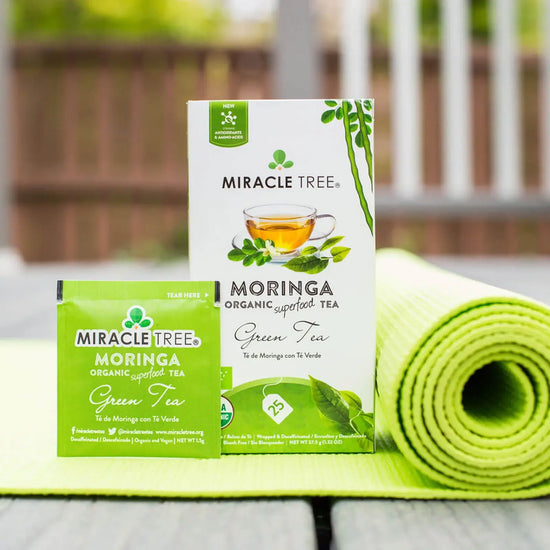


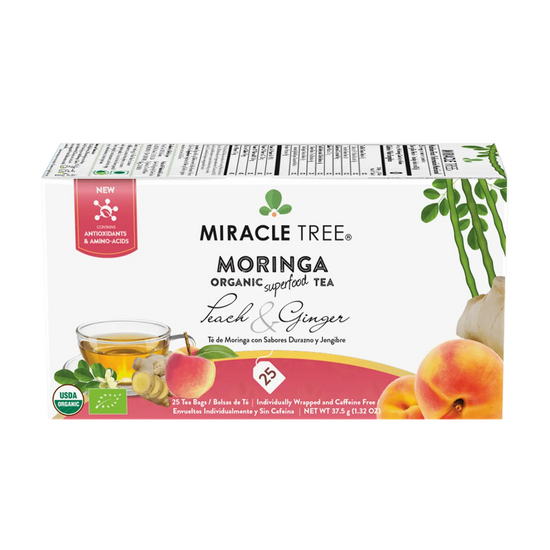
Spara 10 % på alla köp av moringate Persika & Ingefära vid beställningar från $15
DAILYOFFER
Kort svar: moringa står sig väl mot grönkål, spirulina, matcha och vetegräs när det gäller näringstäthet, och det är det enda i gruppen som är ett komplett växtbaserat protein, koffeinfritt och så torktåligt att det kan odlas utan bevattning. Det är inte "bättre" på allt. Här nedan följer en ärlig jämförelse, inklusive de punkter där de andra vinner.
De flesta påståenden i stil med "moringa har 17 gånger så mycket kalcium som mjölk" - våra egna inräknade - jämför torkat moringablad gram för gram med färsk mat. Det är ett legitimt sätt att jämföra näringstäthet, eftersom torkningen tar bort vattnet och koncentrerar allt annat, men det är inte samma sak som att jämföra det man faktiskt äter vid ett tillfälle. En tesked moringapulver är ett par gram; ett glas mjölk är över tvåhundra.
Det tycker vi är värt att säga rakt ut. Näringstätheten i moringablad är verkligen ovanlig, och den behöver inte överdrivas.
| Moringa | Grönkål | Spirulina | Matcha | Vetegräs | |
|---|---|---|---|---|---|
| Komplett protein (alla 9 essentiella aminosyror) | Ja | Nej | Ja | Nej | Nej |
| Koffein | Inget | Inget | Inget | Högt | Inget |
| Växtbaserat järn | Högt | Måttligt | Högt | Lågt | Måttligt |
| Kalcium | Högt | Måttligt | Lågt | Lågt | Lågt |
| Kan drickas som te | Ja | Nej | Nej | Ja | Nej |
| Smak | Grön, milt jordig | Besk, grönsaksaktig | Kraftig, havsdoftande | Gräsig, umami, besk | Skarp, mycket gräsig |
Vi säger hellre som det är:
Den rimliga slutsatsen är inte att något av dem ersätter de andra. Den är att moringa är ovanligt mångsidigt - ett komplett protein, koffeinfritt, drickbart som te och rikt på järn och kalcium - och att det därför förtjänar en plats i vardagsrutinen snarare än en plats på prispallen.
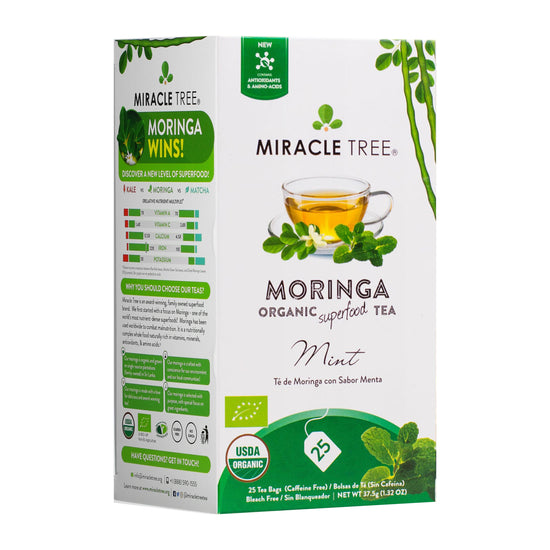
Det är samma blad. Moringate är en infusion och ger därför den vattenlösliga delen av bladet i en trevlig varm dryck. Moringapulver är hela det malda bladet och ger därför betydligt mer per portion, men måste blandas ner i mat. Mer om skillnaden, och om vad forskningen visar och inte visar.
* Dessa påståenden har inte utvärderats av den amerikanska myndigheten Food and Drug Administration. Denna produkt är inte avsedd att diagnostisera, behandla, bota eller förebygga någon sjukdom.
Se hur moringa står sig mot populära superfoods, gram för gram
Gram för gram, torkat moringablad jämfört med vardagliga livsmedel. En typisk portion är bara några gram, så mängderna per portion är mycket mindre.
mer kalcium än helmjölk
mer järn än rå spenat
mer protein än naturell yoghurt
mer kalium än bananer
koffein – moringa är naturligt koffeinfritt

Biotillgänglighet beskriver hur väl kroppen tar upp och använder ett näringsämne, och den beror på hela livsmedlet, inte bara på siffrorna på en etikett. Här är vad moringablad bidrar med.
Vår moringa är helt enkelt torkade, malda blad utan något extraherat eller tillsatt, så du får de vitaminer, mineraler och växtämnen som bladet naturligt innehåller, tillsammans.
Moringablad innehåller C-vitamin tillsammans med järn. C-vitamin hjälper kroppen att ta upp det icke-hemjärn som finns i växtbaserade livsmedel. Bladet ger också kalcium, magnesium och kalium.
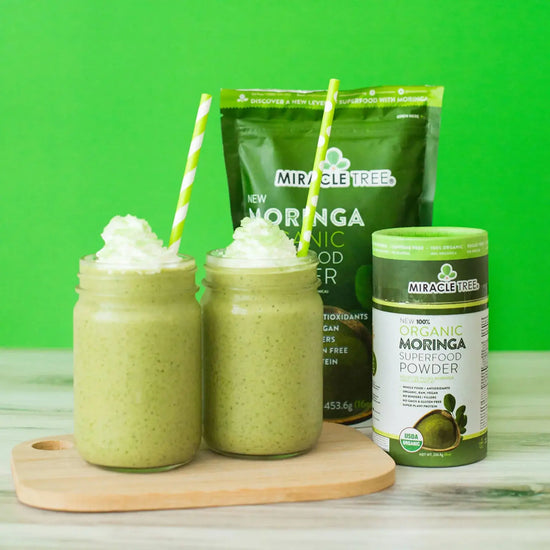
Moringa har en mild, jordig smak som lätt blandas i te, smoothies och vardagsmat, så det är enkelt att göra det till en del av en balanserad rutin.
Till skillnad från matcha och andra teer som görs på teplantan är moringablad naturligt koffeinfria, så du kan njuta av dem när som helst på dagen.
| Näringsämne (per 100 g) | Moringa Vårt val | Grönkål | Matcha | Spirulina | Vetegräs |
|---|---|---|---|---|---|
| Protein | 27.1g | 2.9g | 29.6g | 57.5g | — |
| Kalcium | 2 003 mg | 254mg | 420mg | 120mg | — |
| Järn | 28,2 mg | 1,6 mg | 17,0 mg | 28,5 mg | — |
| A-vitamin | — | 241 µg RAE | 2 400 µg RAE | 29 µg RAE | — |
| C-vitamin | 17,3 mg | 93,4 mg | 60mg | 10,1 mg | — |
| Kalium | 1 324 mg | 348mg | 2 700 mg | 1 363 mg | — |
| Antioxidanter |
Värden per 100 g av respektive livsmedel i den form det säljs: moringabladspulver (Gopalakrishnan et al., Food Science and Human Wellness, 2016), matchapulver (MEXT Standard Tables of Food Composition in Japan, 8th ed.), spirulina (torkad) och grönkål (färsk, rå) från USDA FoodData Central. Torkade pulver är koncentrerade, så en typisk portion på några gram ger betydligt mindre. — = inget tillförlitligt publicerat värde. A-vitamin som µg RAE. Rådfråga hälso- och sjukvårdspersonal innan du ändrar din kost.
Båda är näringstäta, och var och en har sina styrkor. Gram för gram innehåller spirulina mer protein, medan moringabladspulver har betydligt mer kalcium, med liknande mängder järn och kalium. Moringa har också en mildare, jordig smak jämfört med spirulinans starka havssmak.
Matcha är ett grönt te och innehåller naturligt koffein. Moringa är naturligt koffeinfri, så du kan njuta av den när som helst på dagen. Många av våra kunder berättar att en kopp får dem att känna sig uppfriskade och upplyfta, och bladen ger naturligt B-vitaminer och järn.
Många njuter av moringa varje dag som en del av en balanserad kost. Vi rekommenderar att du börjar med 1-2 teskedar pulver eller 1-3 koppar te per dag och anpassar efter vad som passar dig. Om du är gravid, ammar, tar läkemedel eller har ett medicinskt tillstånd bör du först rådfråga din vårdgivare.
Även om moringablad generellt anses vara säkra och näringsrika rekommenderar vi att du rådgör med din vårdgivare innan du lägger till ett nytt kosttillskott i din rutin under graviditet eller amning.
För moringapulver rekommenderar vi 1-2 teskedar dagligen. För te är 1-3 koppar per dag idealiskt. Börja med en mindre mängd och öka gradvis för att hitta det som fungerar bäst för din kropp. Moringa är skonsam och tolereras väl av de flesta.
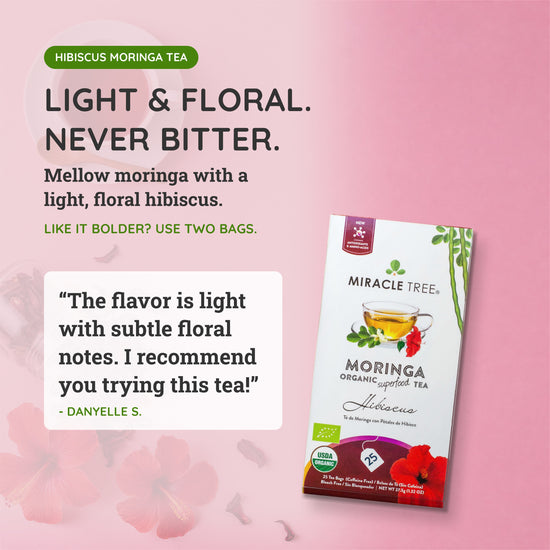
Moringa har en mild, jordig smak med subtila toner av grönt te. Våra förstklassiga moringateblandningar är omsorgsfullt komponerade för att vara mjuka och behagliga, vilket gör dem lätta att njuta av varje dag. Många kunder beskriver smaken som uppfriskande och naturligt söt.
Ja, alla moringaprodukter från Miracle Tree är certifierat ekologiska. Vi köper vår moringa från hållbara odlingar i Sri Lanka som följer strikta ekologiska odlingsmetoder, vilket säkerställer högsta kvalitet och renhet.
Vi köper vår moringa från certifierat ekologiska odlingar i Sri Lanka, där det tropiska klimatet lämpar sig väl för odling av moringa. Vårt fokus på ett enda ursprung stöder spårbarhet, kvalitet och hållbara jordbrukssamhällen.
Handla tryggt i vetskap om att våra prisbelönta Miracle Tree-produkter är älskade av kunder överallt. Hitta dina nya favoriter i dag.
Vår moringa är ekologiskt certifierad enligt USDA- och EU-standarder och odlas i orörda lankesiska regnskogar. Det innebär högre näringstäthet, äkta renhet och noll onödiga tillsatser. Varje produkt vi tillverkar är ekologisk, fri från GMO och håller samma kompromisslösa standard från blad till kopp.
Vi arbetar direkt med oberoende lankesiska odlare enligt en modell med ”köpta blad”, där upp till 70 % av värdet går tillbaka till dem. Det ger bättre försörjning, starkare partnerskap och jämn kvalitet vid ursprunget. Etisk inköpspraxis är inget påstående – det är så vi arbetar varje dag.
Våra teer odlas omsorgsfullt och bearbetas för hand av skickliga hantverkare, inte av industriella system. Det bevarar smaken, kvaliteten och moringans naturliga fördelar i varje sats. Resultatet är en renare, mer förfinad kopp – framtagen med precision och omsorg från början till slut.
Varje ingrediens väljs för kvalitet, näring och syfte – inget tillsätts utan full insyn. Vår direkta leveranskedja ger oss full kontroll från inköp till färdig produkt. Det som går in är avsiktligt, spårbart och i linje med standarderna bakom varje Miracle Tree-produkt.