By Kunal Mirchandani, Founder
Miracle Tree's moringa comes from farms in Sri Lanka, and the brand is certified organic and fairly traded. This Sri Lanka moringa farm organic powder is made from moringa leaves grown on trees that are planted, watered, pruned and harvested by the people who work the plantations. Here is a plain look behind the label at where the trees grow, how they are tended, who grows them, and how to read a moringa powder label before you trust it in your kitchen. This is about where your food comes from, not a health claim.
Where does your moringa come from?
Miracle Tree moringa is grown in Sri Lanka, and that origin is what you should look for on the label. Many home cooks like to stir the powder into smoothies, soups, or warm drinks. We describe the growing region only in general terms, because the details we can confirm are the ones we share.
Miracle Tree was co-founded in 2013 by Kunal Mirchandani to introduce Americans to moringa. The company is family-owned, and it has grown into a line of moringa teas and powders sold in 33+ countries. The team's focus has stayed the same since the start: bring moringa to home cooks in a form that is easy to trust and easy to use.
When you buy a powder, the question to ask is where the leaves were grown. For Miracle Tree, the answer is Sri Lanka, and the farm details are the same story the team tells across its products.
Are your moringa farms organic?
Yes. Miracle Tree's products are certified organic, and that certification is a big part of how the brand farms and sells moringa.
Organic certification means the trees are grown under a set of organic farming rules, and the farm is checked against those rules. It is more than a word printed on a bag. The rules shape how the land and trees are cared for, and the checks are what make the label mean something.
For the certification details, including who verified it and which standard applies, look at the package. That is the most reliable place to confirm the specifics for the exact product in your pantry.
What makes a Sri Lanka moringa farm organic powder different from a mystery blend?
The biggest difference is that you can check where the powder came from. A clear country of origin tells you where the leaves were grown, so you are not left guessing.
Organic certification and fair trade are details you can look for on the label. You do not have to take them on faith. Miracle Tree's products are fairly traded, and the packaging is plastic-free, so you can judge the brand by what it says and what it does.
A mystery blend often tells you little about its leaves or the people who grew them. Transparency is the easiest way to tell the two apart, and it is the standard this brand aims to meet.
How do you care for moringa trees?
Moringa trees are planted, watered and pruned as they grow. The farm team tends them through each stage, and the exact timing and methods come from the farm team, not from general guesses.
When the leaves are ready, they are harvested by hand and then dried. Once dry, the leaves are ground into a fine green powder. Each step matters for the final color and flavor, and that is why the process is kept simple.
The daily rhythm of tending and harvesting is steady work. We share the details the team can confirm, and we leave out anything we cannot stand behind.
Who works on the plantations?
The people who tend and harvest Miracle Tree moringa are farmers and workers on the Sri Lankan plantations. Their work is what turns a tree into a powder you can buy.
Miracle Tree is fairly traded. In plain terms, fair trade is a set of trading terms meant to give growers a fairer deal than a standard market price. It is the brand's commitment to the people who grow the leaves, and it is one of the things you can check on the label.
The brand's packaging is plastic-free, which is a practical choice that reaches past the farm to your kitchen. We do not share worker counts, wages or quotes here, because we do not have figures to back them up.
How do you read a moringa powder label?
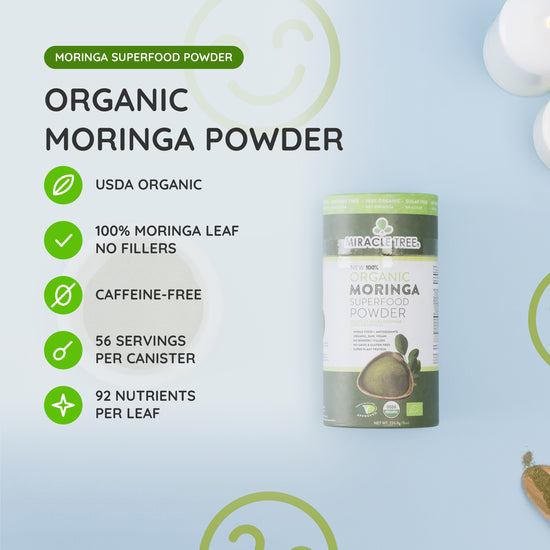
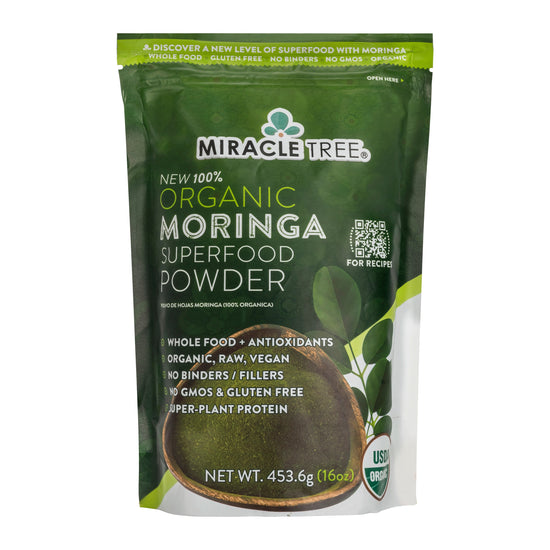
Start with three things: the country of origin, the organic certification, and whether the brand says it is fairly traded. Miracle Tree's moringa is from Sri Lanka, certified organic, and fairly traded.
Look at the ingredient list next. A good moringa powder should list moringa leaf and nothing else. If the list is long, you are buying a blend, and the label should tell you what is in it.
Start with a small spoonful stirred into something you already enjoy. Compare the Nutrition Facts panel from one product to another instead of assuming the numbers match. This is a food, and we make no claims about treating, curing or preventing any disease or condition.
How do you use moringa powder at home?
Start small. A little whisked into a drink or stirred into food is enough to see how the powder behaves in your cooking.
You can expect a mild, earthy flavor and a green color. Because the flavor is gentle, it blends well with fruit, yogurt, ginger and warm spices. A thick, fruity smoothie is one of the easiest places to start, since the sweetness balances the earthiness.
The recipe below is a simple place to begin. You can also whisk moringa into spiced chai or stir it into a creamy mango lassi, and adjust the amount to your taste.
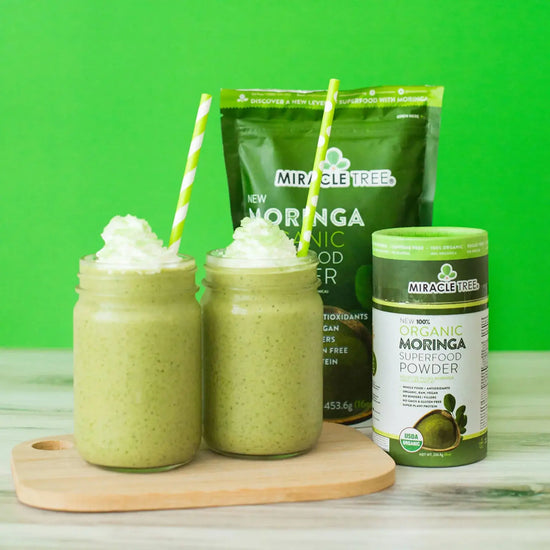
Swamp Water Smoothie
Serves 2 smoothies, about 12 oz (350 ml) each · 5 minutes
Ingredients
- 2 cups (300 g) frozen pineapple chunks
- 1 medium banana, sliced and frozen
- 2 packed cups (60 g) fresh baby spinach
- 1 cup (240 ml) coconut water
- 1 tbsp fresh lime juice
- 1 tbsp maple syrup
- 2 tsp Miracle Tree Organic Moringa Powder
Method
- Pour the coconut water, lime juice and maple syrup into the blender. Add the moringa powder and spinach. Blend on high until the spinach is completely broken down, which gives a smooth swamp color instead of green specks.
- Add the frozen pineapple and banana. Skip the ice, as the frozen fruit keeps the smoothie thick without watering it down. Blend on high, stopping to scrape down the sides and stir if the blades spin without catching.
- Taste and blend in a little more maple syrup if you want it sweeter. Pour into two clear glasses and serve right away.
Frequently asked questions
Is Miracle Tree moringa powder grown in Sri Lanka?
Yes. Miracle Tree moringa is grown on farms in Sri Lanka, and the origin is the first thing to check on the label. For sourcing details beyond that, the package is the best place to look. You can also reach the team at miracletree.org.
What does certified organic moringa powder mean?
It means the trees are grown under a set of organic farming rules, and the farm is checked against those rules. Miracle Tree's products are certified organic. The package carries the certification details, so look there to confirm the specifics for the product you buy.
What does fairly traded mean for moringa farmers?
Fair trade is a set of trading terms meant to give growers a fairer deal than a standard market price. Miracle Tree is fairly traded, which is the brand's commitment to the farmers and workers who grow the leaves. We do not share wage figures here, so contact the team if you want more detail.
How much moringa powder should I put in a smoothie?
Start with a small spoonful and adjust to taste. Amounts vary by recipe and by brand, so the smoothie card in this article is a good place to begin. Blending it with fruit makes the earthy flavor easier to balance.
What does moringa powder taste like?
It has a mild, earthy flavor and a green color. Most people find it blends well with fruit, ginger and warm spices. Taste a small amount first, then build from there.
Miracle Tree is a family-owned brand, and its moringa is grown in Sri Lanka, certified organic and fairly traded. Start with a small spoonful, read the label, and try one of the recipes in this article. You can find Miracle Tree at miracletree.org or on social media at @trymiracletree.
About Kunal Mirchandani: Kunal Mirchandani co-founded Miracle Tree® in 2013 to introduce Americans to moringa, one of the most nutrient-dense plants on earth. As CEO, he has grown the family-owned brand into a line of moringa teas and powders sold in 33+ countries. Find Miracle Tree at miracletree.org or @trymiracletree.