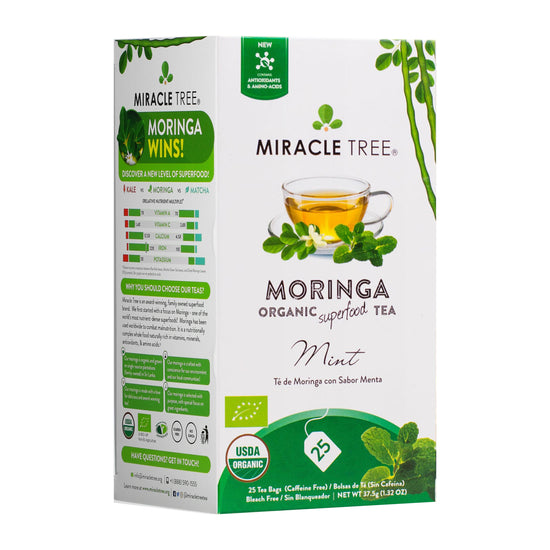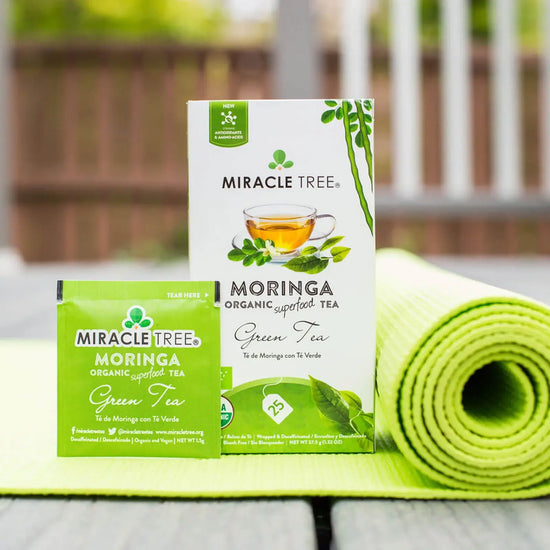


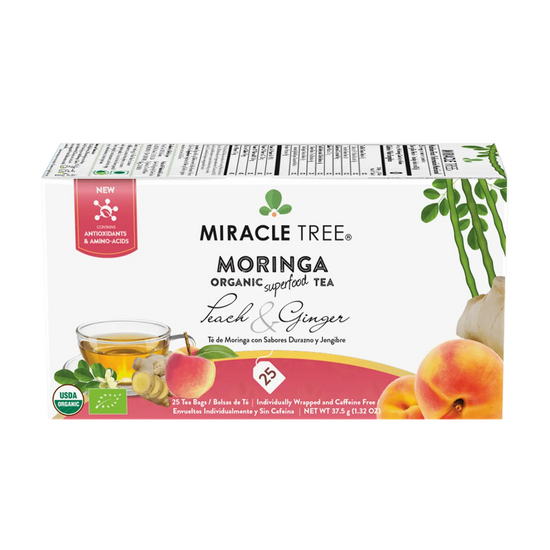
$15以上のご注文で、ピーチジンジャー モリンガティーのご購入がすべて10%オフ
DAILYOFFER
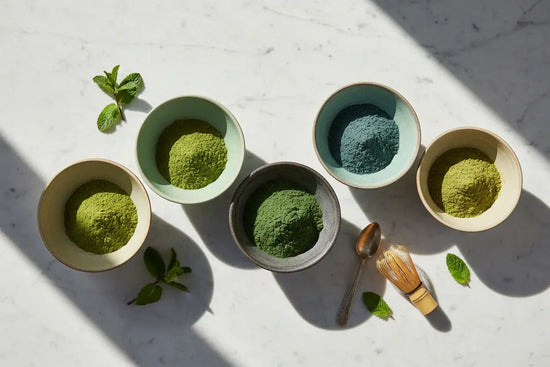
結論から言うと: モリンガは栄養密度の点でケール、スピルリナ、抹茶、ウィートグラスに十分に肩を並べます。さらに、この中で植物性の完全タンパク質であり、カフェインを含まず、灌漑なしで育つほど乾燥に強いのはモリンガだけです。とはいえ、すべてにおいて「優れている」わけではありません。以下では、他のものが勝る点も含めて正直に比較します。
「モリンガのカルシウムは牛乳の17倍」といった主張の多くは、当社のものも含めて、乾燥モリンガ葉と生鮮食品をグラム単位で比べたものです。乾燥によって水分が抜け、それ以外の成分が濃縮されるため、栄養密度の比較としては正当な方法です。ただし、実際に一度に食べる量を比べているわけではありません。モリンガパウダー小さじ1杯は数グラム、グラス1杯の牛乳は200グラム以上あります。
この点ははっきりお伝えしておくべきだと考えています。モリンガ葉の栄養密度は本当に際立っており、誇張する必要はありません。
| モリンガ | ケール | スピルリナ | 抹茶 | ウィートグラス | |
|---|---|---|---|---|---|
| 完全タンパク質(必須アミノ酸9種すべて) | あり | なし | あり | なし | なし |
| カフェイン | なし | なし | なし | 多い | なし |
| 植物性の鉄分 | 多い | 中程度 | 多い | 少ない | 中程度 |
| カルシウム | 多い | 中程度 | 少ない | 少ない | 少ない |
| お茶として飲める | はい | いいえ | いいえ | はい | いいえ |
| 味わい | 青々として、ほのかに土のよう | 苦味があり、野菜らしい | 力強く、磯の風味 | 草のような香り、うま味、苦味 | 鋭く、非常に草のよう |
ここは正直にお伝えします。
ここから導かれる妥当な結論は、どれかひとつが他をすべて置き換えるということではありません。モリンガは完全タンパク質で、カフェインを含まず、お茶として飲め、鉄分とカルシウムが豊富という珍しい万能さを持っている、ということです。だからこそ、表彰台の順位ではなく、毎日の習慣の中に居場所を得ているのです。
どちらも同じ葉です。モリンガティーは浸出させるお茶なので、葉の水溶性の成分を心地よい温かい飲み物として届けます。モリンガパウダーは葉を丸ごと挽いたものなので、1回分あたりの量はかなり多くなりますが、食べ物に混ぜて使う必要があります。違いについて、そして研究で示されていることと示されていないことについて、さらに詳しく。
* これらの記述は米国食品医薬品局(FDA)による評価を受けていません。本製品は、いかなる疾病の診断、治療、治癒、または予防を目的とするものではありません。
人気のスーパーフードとモリンガを、同じグラム数で比べてみましょう
乾燥したモリンガの葉を、同じグラム数で身近な食品と比べています。通常の1食分はわずか数グラムのため、1食あたりの量はずっと少なくなります。
牛乳より多いカルシウム
生のほうれん草より多い鉄
プレーンヨーグルトより多いタンパク質
バナナより多いカリウム
カフェイン:モリンガはもともとノンカフェイン


バイオアベイラビリティとは、体が栄養素をどれだけ吸収して利用できるかを表すもので、ラベルの数字だけでなく、食品全体によって左右されます。ここでは、モリンガの葉が備えている特長をご紹介します。
私たちのモリンガは、抽出も添加もせず、乾燥して粉砕しただけの葉です。そのため、葉が本来含むビタミン、ミネラル、植物成分をまとめて摂ることができます。
モリンガの葉には、鉄とともにビタミンCが含まれています。ビタミンCは、植物性食品に含まれる非ヘム鉄の体内での吸収を助けます。この葉にはカルシウム、マグネシウム、カリウムも含まれています。
モリンガはマイルドで大地のような風味で、お茶、スムージー、普段の食事にも溶け込みやすいため、バランスのとれた習慣に無理なく取り入れられます。
抹茶など、チャノキから作られるお茶とは異なり、モリンガの葉はもともとカフェインフリーなので、一日中いつでもお楽しみいただけます。
| 栄養素(100gあたり) | モリンガ おすすめ | ケール | 抹茶 | スピルリナ | ウィートグラス |
|---|---|---|---|---|---|
| タンパク質 | 27.1g | 2.9g | 29.6g | 57.5g | — |
| カルシウム | 2,003mg | 254mg | 420mg | 120mg | — |
| 鉄 | 28.2mg | 1.6mg | 17.0mg | 28.5mg | — |
| ビタミンA | — | 241µg RAE | 2,400µg RAE | 29µg RAE | — |
| ビタミンC | 17.3mg | 93.4mg | 60mg | 10.1mg | — |
| カリウム | 1,324mg | 348mg | 2,700mg | 1,363mg | — |
| 抗酸化物質 |
各食品の販売時の状態での100gあたりの値:モリンガリーフパウダー(Gopalakrishnan et al., Food Science and Human Wellness, 2016)、抹茶パウダー(MEXT Standard Tables of Food Composition in Japan, 8th ed.)、スピルリナ(乾燥)とケール(生)はUSDA FoodData Centralによる。乾燥パウダーは濃縮されているため、数グラム程度の通常の1食分から摂れる量ははるかに少なくなります。— = 信頼できる公表値なし。ビタミンAはµg RAE。食生活を変える前には、医療専門家にご相談ください。
どちらも栄養密度が高く、それぞれに強みがあります。同じグラム数で比べると、スピルリナはタンパク質が多く、モリンガのリーフパウダーはカルシウムがはるかに多く、鉄とカリウムは同程度です。また、モリンガはスピルリナの強い海の風味に比べ、マイルドで大地のような味わいです。
抹茶は緑茶の一種で、もともとカフェインを含んでいます。モリンガはもともとカフェインフリーなので、一日中いつでもお楽しみいただけます。多くのお客様から、一杯飲むとすっきりと晴れやかな気分になるという声をいただいており、その葉はビタミンB群と鉄を自然に含んでいます。
多くの方が、バランスのとれた食事の一部として毎日モリンガを楽しんでいます。まずは1日にパウダー小さじ1〜2杯、またはお茶1〜3杯から始め、ご自身に合わせて調整することをおすすめします。妊娠中、授乳中、服薬中の方、または持病のある方は、事前にかかりつけの医療機関にご相談ください。
モリンガの葉は一般的に安全で栄養豊富と考えられていますが、妊娠中や授乳中に新しいサプリメントを習慣に取り入れる前には、かかりつけの医療機関にご相談いただくことをおすすめします。
モリンガパウダーの場合は、1日小さじ1〜2杯をおすすめします。お茶の場合は、1日1〜3杯が理想的です。少なめの量から始めて徐々に増やし、ご自身の体に合う量を見つけてください。モリンガはやさしく、ほとんどの方が問題なく摂ることができます。
モリンガは、ほのかに緑茶を思わせる、マイルドで大地のような風味です。当社のプレミアムなモリンガティーブレンドは、なめらかで飲みやすく仕上げているので、毎日気軽にお楽しみいただけます。多くのお客様が、爽やかで自然な甘みがあると表現しています。
はい、Miracle Tree のモリンガ製品はすべてオーガニック認証を取得しています。厳格な有機農法を守るスリランカの持続可能な農園からモリンガを調達し、最高の品質と純度をお約束しています。
当社のモリンガは、スリランカのオーガニック認証農園から調達しています。熱帯の気候はモリンガの栽培に適しています。単一産地にこだわることで、トレーサビリティ、品質、そして持続可能な農業を営む地域社会を支えています。
受賞歴のあるMiracle Treeの製品は、世界中のお客様に愛されています。安心してお買い物をお楽しみください。新しいお気に入りを今日見つけましょう。
私たちのモリンガは、USDAおよびEUの基準に基づくオーガニック認証を取得し、スリランカの手つかずの熱帯雨林で育てられています。つまり、より高い栄養密度、真の純度、そして不要な添加物ゼロ。私たちがつくるすべての製品はオーガニックかつ非遺伝子組み換えで、葉からカップまで同じ妥協のない基準を守っています。
私たちは「バウトリーフ(買い葉)」モデルを通じてスリランカの独立農家と直接取引しており、価値の最大70%が農家に還元されます。これにより、より良い暮らし、より強いパートナーシップ、そして産地での安定した品質が実現します。倫理的な調達は謳い文句ではなく、私たちの日々のあり方です。
私たちのお茶は、工業的な設備ではなく熟練の職人によって丁寧に栽培され、手作業で加工されています。そのため、どのバッチにも風味と品質、そしてモリンガ本来の恵みが保たれます。こうして生まれるのは、最初から最後まで精密さと心配りをもって仕上げた、よりクリーンで洗練された一杯です。
すべての原材料は、品質、栄養、目的に基づいて選ばれており、完全に把握できないものは一切加えていません。直接のサプライチェーンにより、調達から最終製品まで一貫して管理しています。使われるものはすべて意図的で、追跡可能であり、Miracle Treeのすべての製品を支える基準に沿っています。